Chateau de Sceaux
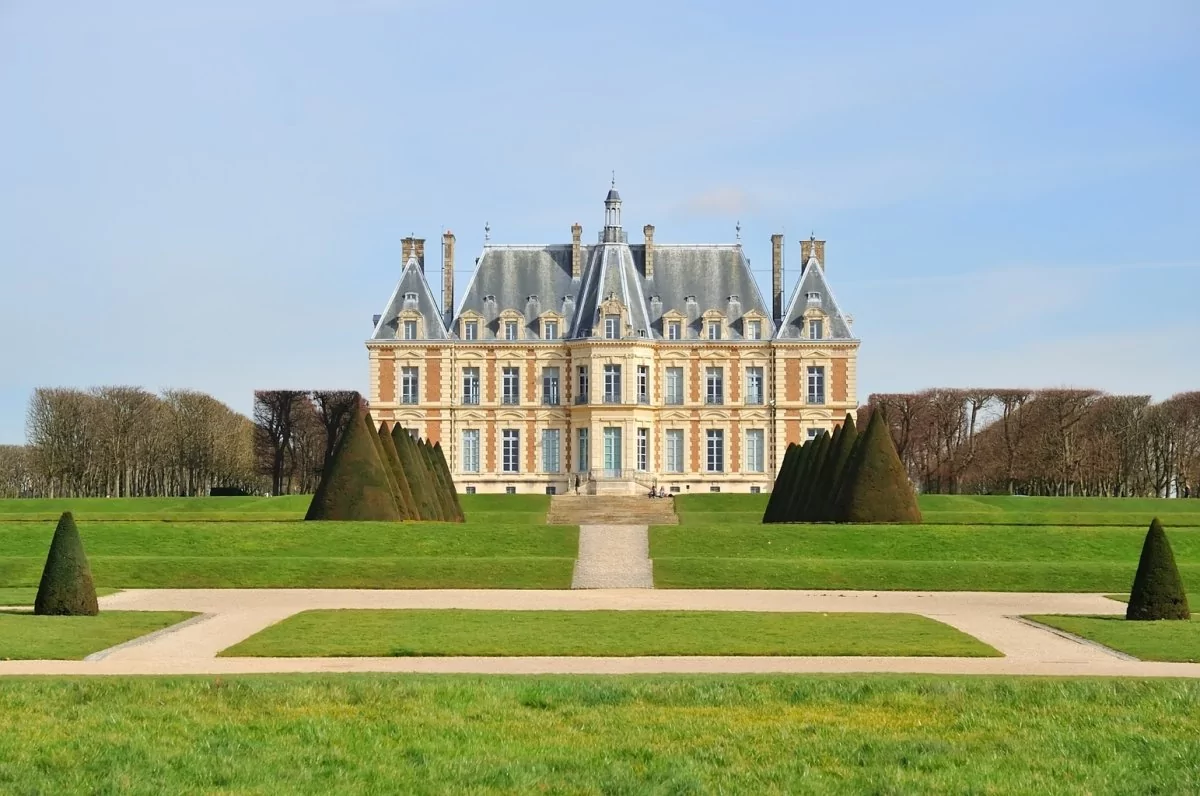
Colbert purchased the land in 1670 to establish a country estate between Paris and Versailles. Rather than constructing a new residence, he expanded the existing one—Fouquet's lesson at Vaux-le-Vicomte was still fresh in his mind—and entrusted the park to André Le Nôtre, adorned with statues by Coysevox and Girardon, a chapel designed by Claude Perrault, and a dome painted by Le Brun.
Le Nôtre created a north-south axis over one kilometer long: a crescent-shaped basin, avenues, and the Great Cascade, whose waters gushed from urns shaped like two sculpted rivers, followed by the Octagon Basin below; from east to west, stepped terraces with sloping sides are arranged, dominated on the east by the Pavillon de l'Aurore. Lacking water, the fountain builder Nicolas Le Jongleur was forced to tap into springs from neighboring communes and dig Colbert's pond. In 1686, Colbert's son, the Marquis de Seignelay, commissioned Jules Hardouin-Mansart to build the orangery that still stands, originally eighty meters long and already used as an art gallery. Louis XIV was received there in 1677 and again in 1685 for a festival featuring an idyll by Lully and Racine.
During the Revolution, the estate was pillaged and sold off piece by piece: the château and its cascades were razed. The current building, constructed of brick and stone, was rebuilt starting in 1856 by the daughter of the agricultural manager, who became Duchess of Trévise. Since 1937, it has housed the collections of the Departmental Domain Museum, formerly known as the Île-de-France Museum.
All exhibitions and places in and around Paris on Groom