Chapelle Saint-François
Paris
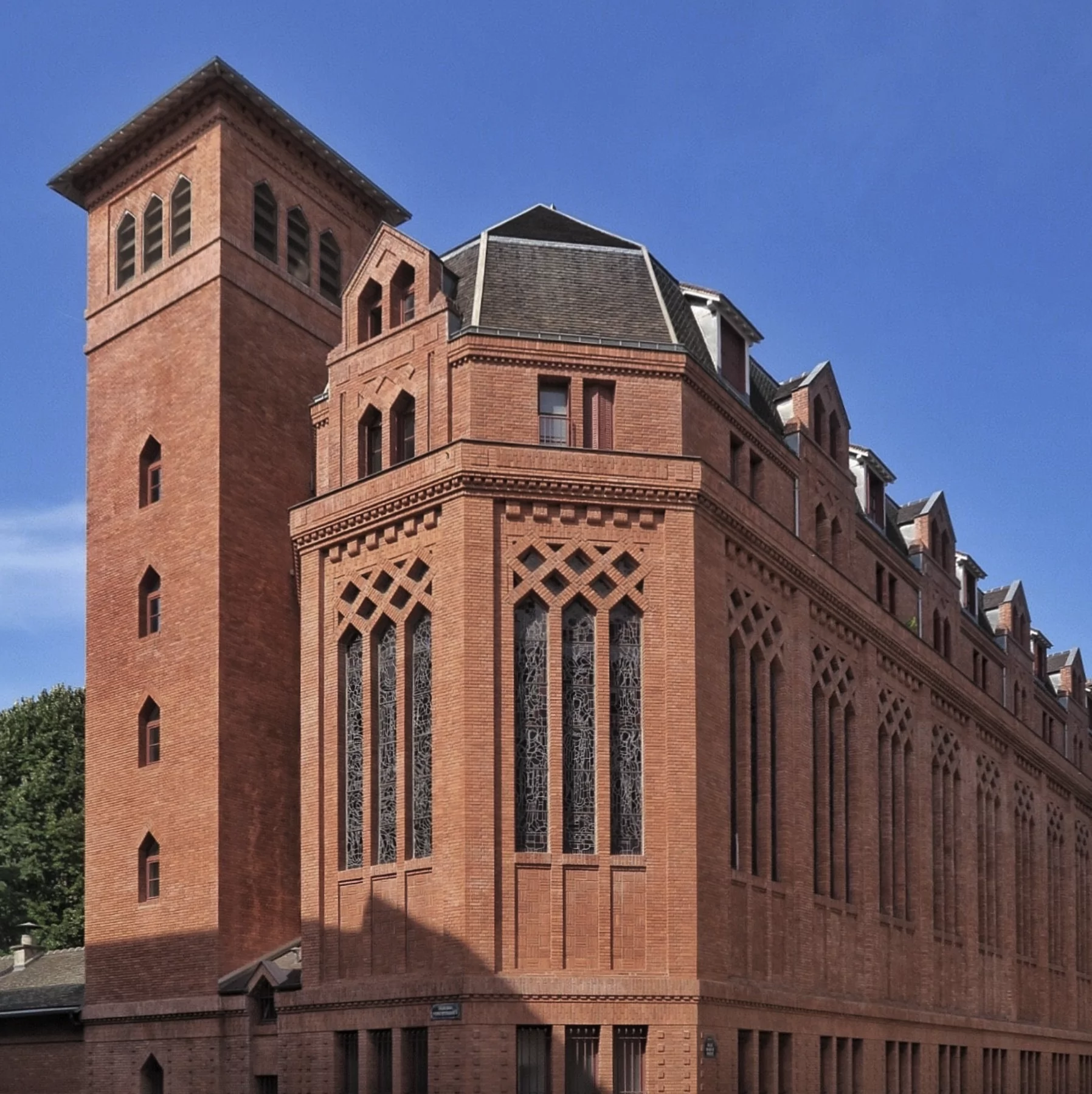
Also known as the Rue-Marie-Rose convent, it houses a Franciscan community.
Following their expulsion from France after the 1905 Law on Separation of Church and State, the Franciscans returned to establish themselves in the country following World War I. They initially settled elsewhere in the 14th arrondissement before acquiring land in the Petit-Montrouge neighborhood in 1923. In 1933, they decided to build their provincial convent there, serving as the seat of the Paris Province.
The building was constructed in brick between 1934 and 1935 by architects Victor Blavette, Paul Gélis, and Louis-Jean Hulot, inspired by the style of Dom Bellot, a Benedictine monk who contributed to renewing religious art of the era. The convent, inaugurated in 1936, housed clergy dedicated to apostolic work in France, missions abroad, and accommodation for foreign Franciscans coming to study in Paris.
In 2013, several Franciscan provinces in France and the French-speaking part of Belgium merged into a single entity, with its headquarters remaining in Paris. Part of the convent is open to the public, including its chapel adorned by stained-glass windows signed by André Pierre, Pierre Villette, and Claude Malespine.
All exhibitions and places in and around Paris on Groom