Halle Saint Pierre
Paris
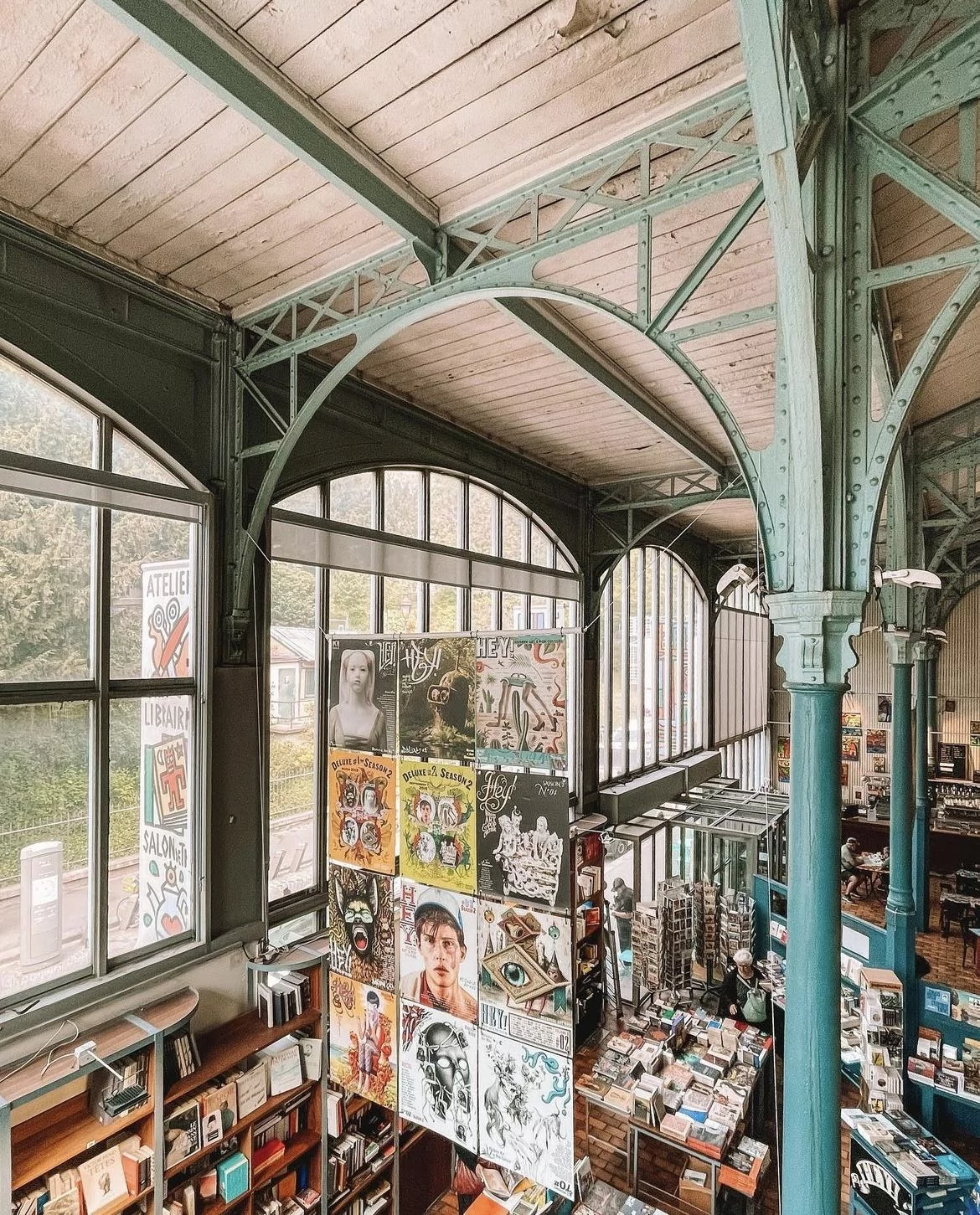
The Halle is rooted in the long architectural and social history of the Montmartre Butte neighborhood. The current building, constructed in 1868 in the characteristic style of nineteenth-century metal halls—inspired by Victor Baltard's works for the Halles de Paris—was originally designed as a covered market to supply this popular quarter during its urban expansion under Haussmann's era.
Over the decades, the building has undergone several changes in function: it first housed a school, then a garage belonging to the Paris municipal cleaning service, before gradually falling into disuse.
The decisive turning point occurred in 1986, when the publisher and art collector Max Fourny, a passionate advocate of naive art, established a museum dedicated to this artistic form that had long remained marginal. Shortly thereafter, in October 1985, the City of Paris — owner of the building — entrusted its management to the association "Halle Saint-Pierre," created specifically for this purpose, to ensure the project's cultural sustainability.
Since 1995, the association has broadened its scope: beyond its initial focus on naive art, it has expanded its programming to include raw art, singular art, and outsider art, organizing three to four temporary exhibitions annually. It was also in that year that the French edition of Raw Vision magazine was launched, helping to establish Halle Saint-Pierre as an internationally recognized venue for these creative forms situated outside institutional artistic circuits.
All exhibitions and places in and around Paris on Groom