Musée de Préhistoire d'Île-de-France
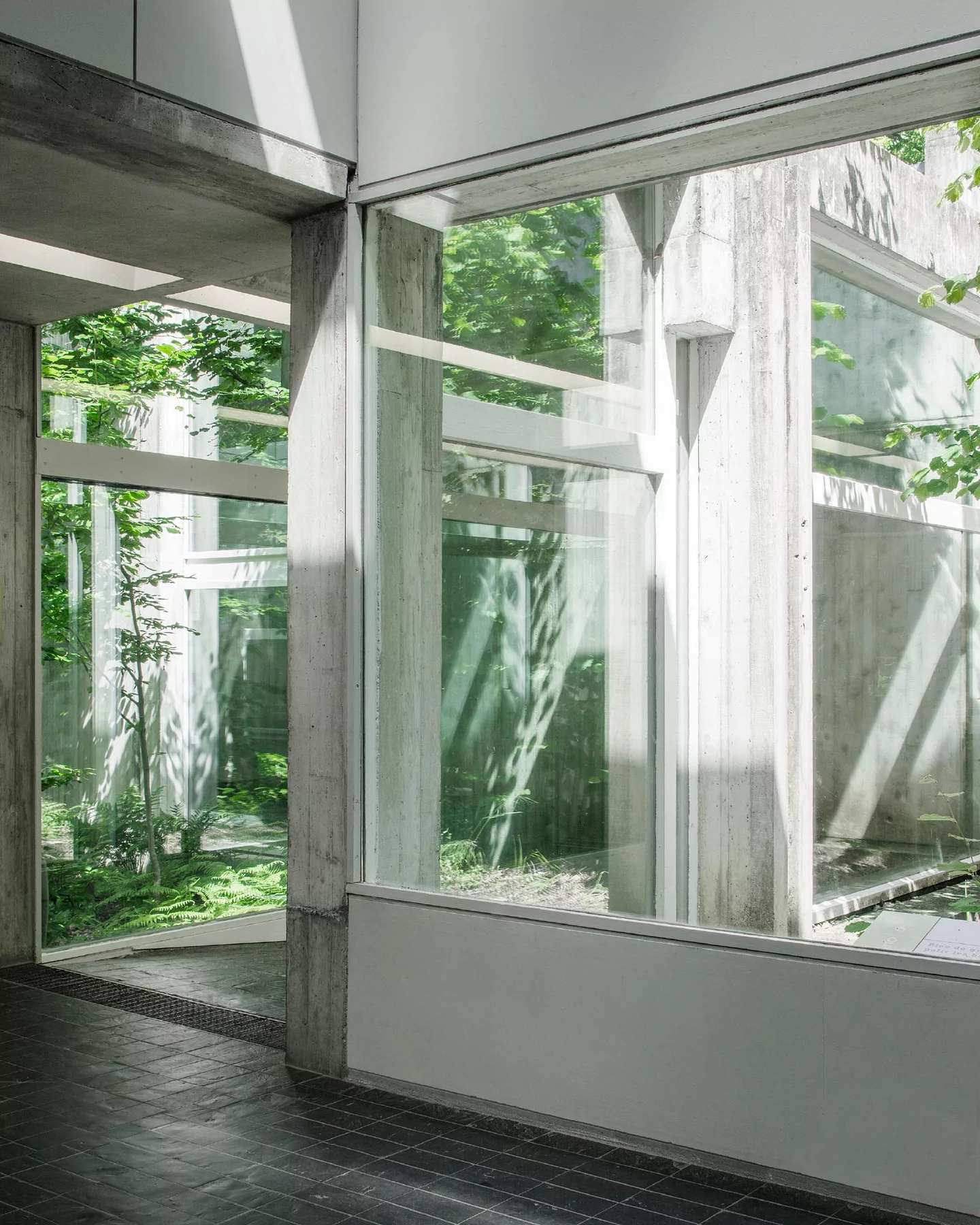
The building, designed by architect and urban planner Roland Simounet—who also conceived the Musée Picasso in Paris and the LaM in Villeneuve-d'Ascq—exemplifies a characteristic form of museum architecture from the late 20th century, playing with the juxtaposition of raw concrete and glass.
Set against the natural slope of the terrain, the building integrates seamlessly into the wooded landscape that surrounds it, composed of pines, oaks, birches, hazels, and outcrops of sandstone—materials and species native to the region. The interior volumes are organized around patio-gardens showcasing flora corresponding to the different prehistoric periods evoked in the tour, while large glass openings ensure visual continuity between the exhibition spaces and the surrounding natural setting.
The route follows a chronological path tracing human occupation of the Paris Basin, from the earliest remains attesting to human presence over 500,000 years ago to the end of the Gallic period in the last quarter of the first century BCE. Among the notable installations are large-scale floor casts reproducing the excavation sites of Pincevent and Étiolles, restoring the appearance of archaeological dig sites at the time of their discovery, as well as a monoxyle canoe from the Carolingian era.
All exhibitions and places in and around Paris on Groom