Maison de Chateaubriand
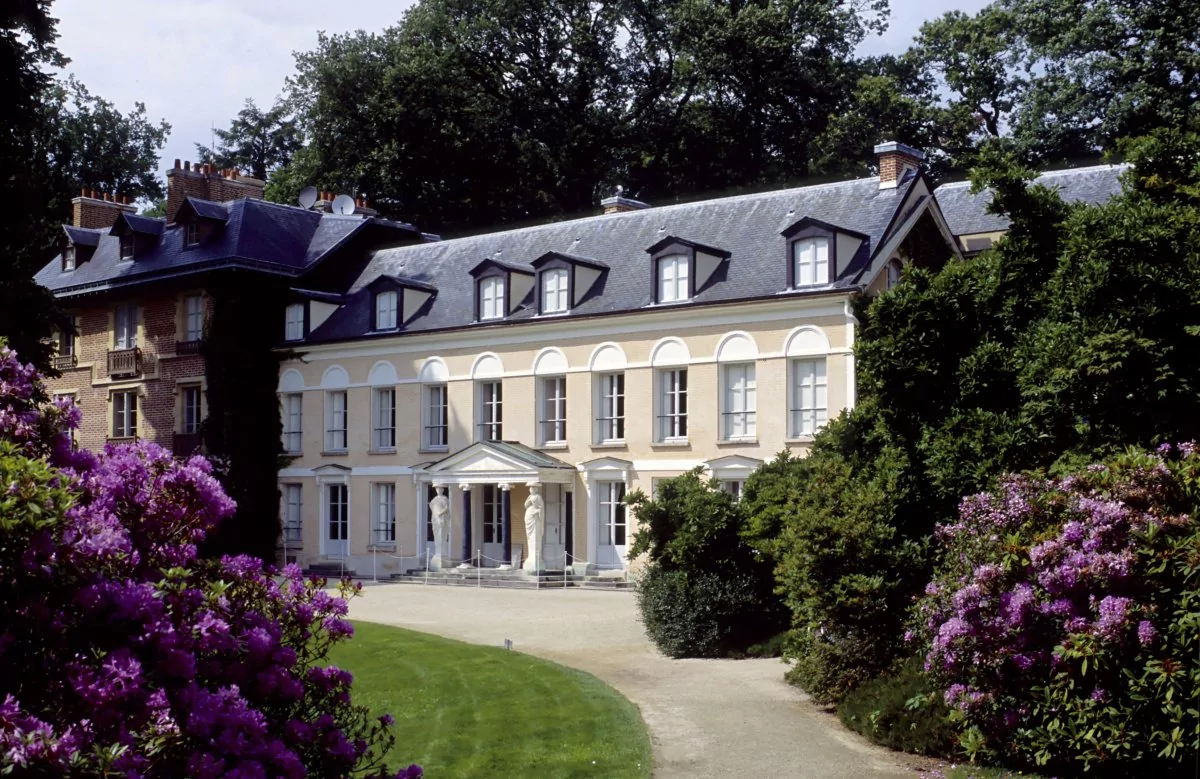
Built at the end of the 18th century by a wealthy brewer, Chateaubriand purchased it in August 1807 for twenty thousand francs: already famous for Atala and The Genius of Christianity, he had just compared Napoleon to Nero in Le Mercure de France and was forced to leave Paris. He remained there for eleven years.
He did everything: added a colonnade of black marble to the façade, equipped his office and library in a turret he named Tour Velléda after the heroine of The Martyrs, and planted fourteen hectares of cedars, catalpas, tulip trees, and cypresses—trees brought back from his travels or obtained at Malmaison through Alexander von Humboldt. It was there that he began Mémoires d'outre-tombe.
Ruined after losing his ministerial post, he must sell the estate at auction in 1817; the buyer, Duke Montmorency-Laval, grants Juliette Récamier the use of the property and commissions a turret wing and an orangery to be built.
From 1914 onwards, the alienist physician Henri Le Savoureux established a rest home there and founded in 1929 the Société Chateaubriand: Valéry, Léautaud, Chagall, Supervielle, and Jean Paulhan all passed through. During the Occupation, Jean Fautrier took refuge in Velléda Tower and painted his series of Hostages while hearing executions take place in the nearby valley.
Now a departmental museum, the house preserves period furnishings and the meridian on which David painted Madame Récamier. The park is extended by an arboretum bearing the label "remarkable garden."
All exhibitions and places in and around Paris on Groom