Basilique Cathédrale Saint-Denis
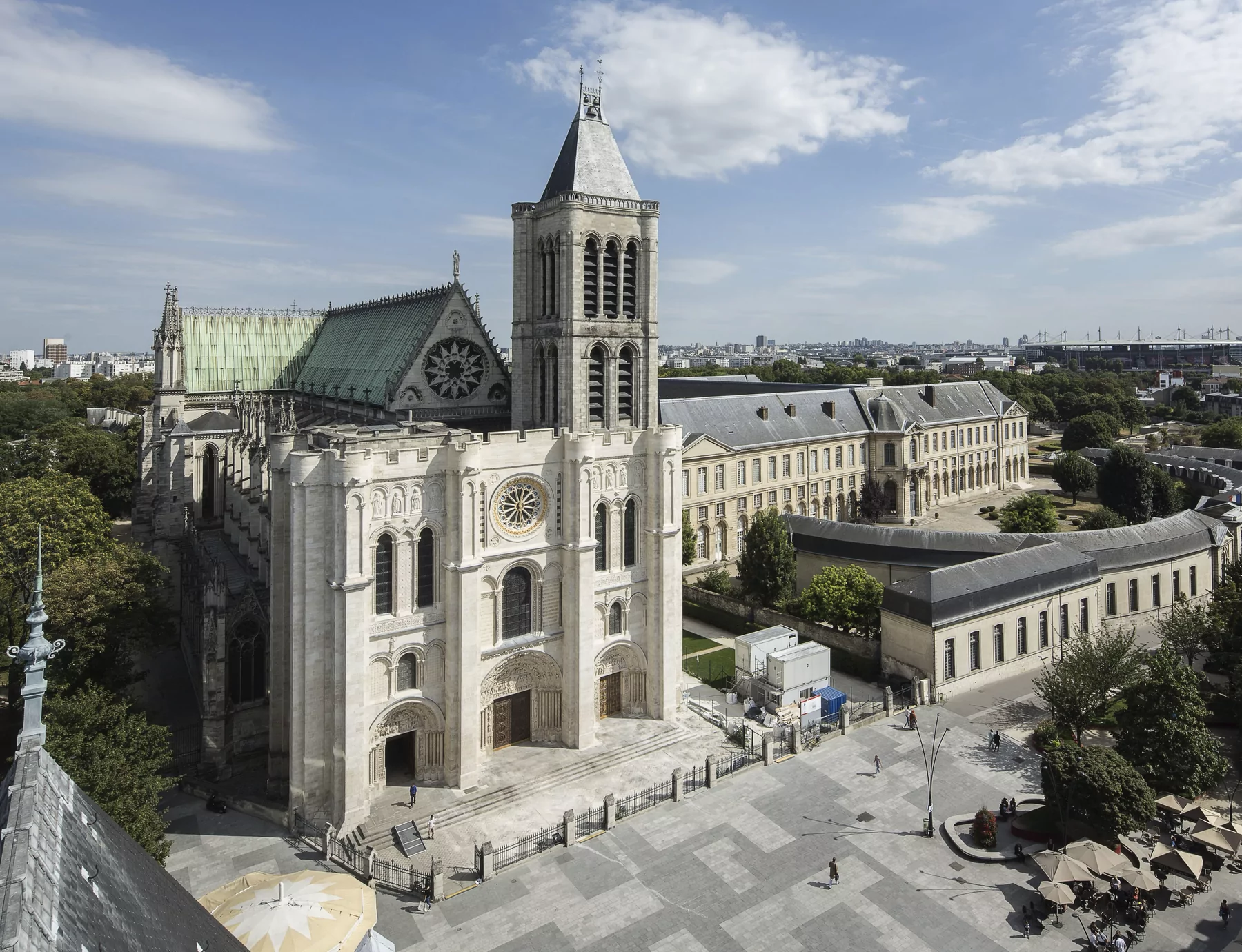
It occupies a burial site dating back to the Gallo-Roman period. According to tradition, Saint Denis, the first bishop of Paris and martyr of the third century, was buried there. Around 475, Saint Geneviève had a chapel built on his tomb, before King Dagobert I founded a Benedictine abbey in 636, where the saint's relics were transferred.
The current building owes its major architectural significance to Abbot Suger, who initiated the reconstruction of the apse and western facade beginning in 1135. Completed in 1144, this new choir is regarded by art historians as the first realization integrating all the principles of Gothic architecture: pointed arches, ribbed vaults, and vast stained-glass windows designed to maximize the influx of light, in accordance with the aesthetic theory developed by Suger himself. In the 13th century, architect Pierre de Montreuil rebuilt the nave and transepts in the Rayonnant Gothic style, giving the building its present appearance, while the western facade still retains elements inspired by Romanesque architecture.
Saint-Denis also became the necropolis of the French kings: almost all sovereigns, from the 10th century to Louis XVIII, were buried there, alongside numerous queens and royal family members; their effigies and sculpted tombs remain in the choir and transept. Damaged during the Revolution, the basilica was restored in the 19th century, notably under the direction of Eugène Viollet-le-Duc.
All exhibitions and places in and around Paris on Groom