La Sorbonne
Paris
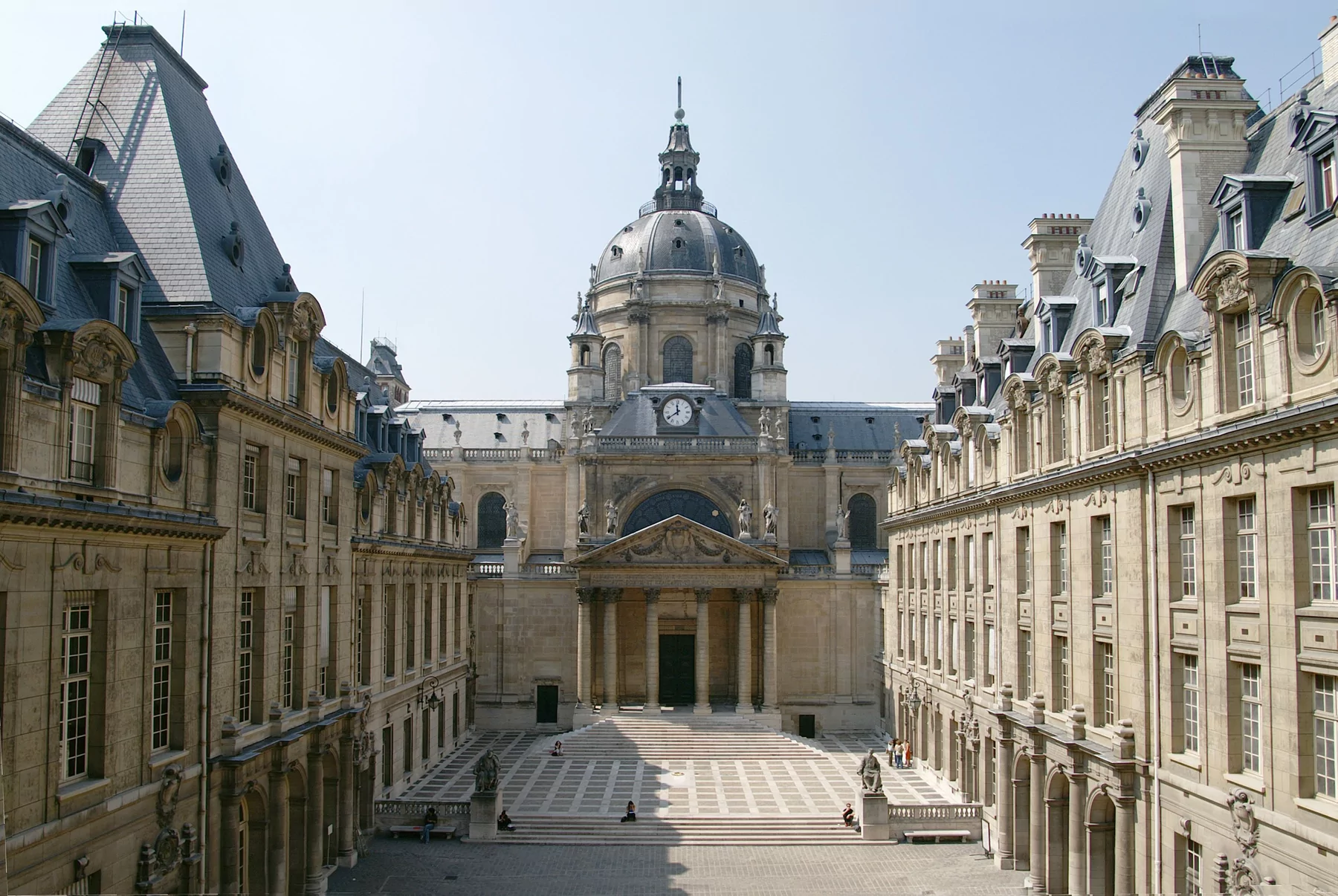
Robert de Sorbon, chaplain of Saint Louis, founded in 1253 a college for poor theology students; the king granted him several houses on Rue Coupe-Gueule, facing Hôtel de Cluny, and within seven years the college purchased almost all of the current plot. The founder imposed an austere architectural character that would long remain its hallmark: a disparate collection of houses and barns set in a garden, endowed with a chapel in the 14th century.
Admitted to the Collège de Clermont in 1606, Richelieu became its provost in 1622 and found dilapidated buildings. As chief minister, he annexed two neighboring colleges and commissioned his architect Jacques Lemercier to rebuild everything on a site twice as large as before, including a grand chapel intended for his tomb. Of this project remains the Sainte-Ursule Chapel, the sole surviving element of the Ancien Régime, identifiable by its Baroque façade. Since 1905 it has been repurposed and now hosts exhibitions and receptions.
The rest dates from the 1880s–1900s. A competition presided over by Charles Garnier was won by his student Henri-Paul Nénot, who proposed a Palace of Sciences and Letters rather than a college. Demolition lasted from 1884 to 1894 (excluding the chapel); the first stone was laid in 1885; Sadi Carnot inaugurated the northern section in 1889 for the centenary of the Revolution, and construction concluded in 1901.
Each ensemble follows an architectural theme. The northern palace, the only one built entirely of noble materials, features a stone neo-Renaissance façade on Rue des Écoles under large slate roofs. The chapel has been listed since 1887; the great amphitheatre and façades have been listed since 1975.
All exhibitions and places in and around Paris on Groom