Musée d'Ennery
Paris
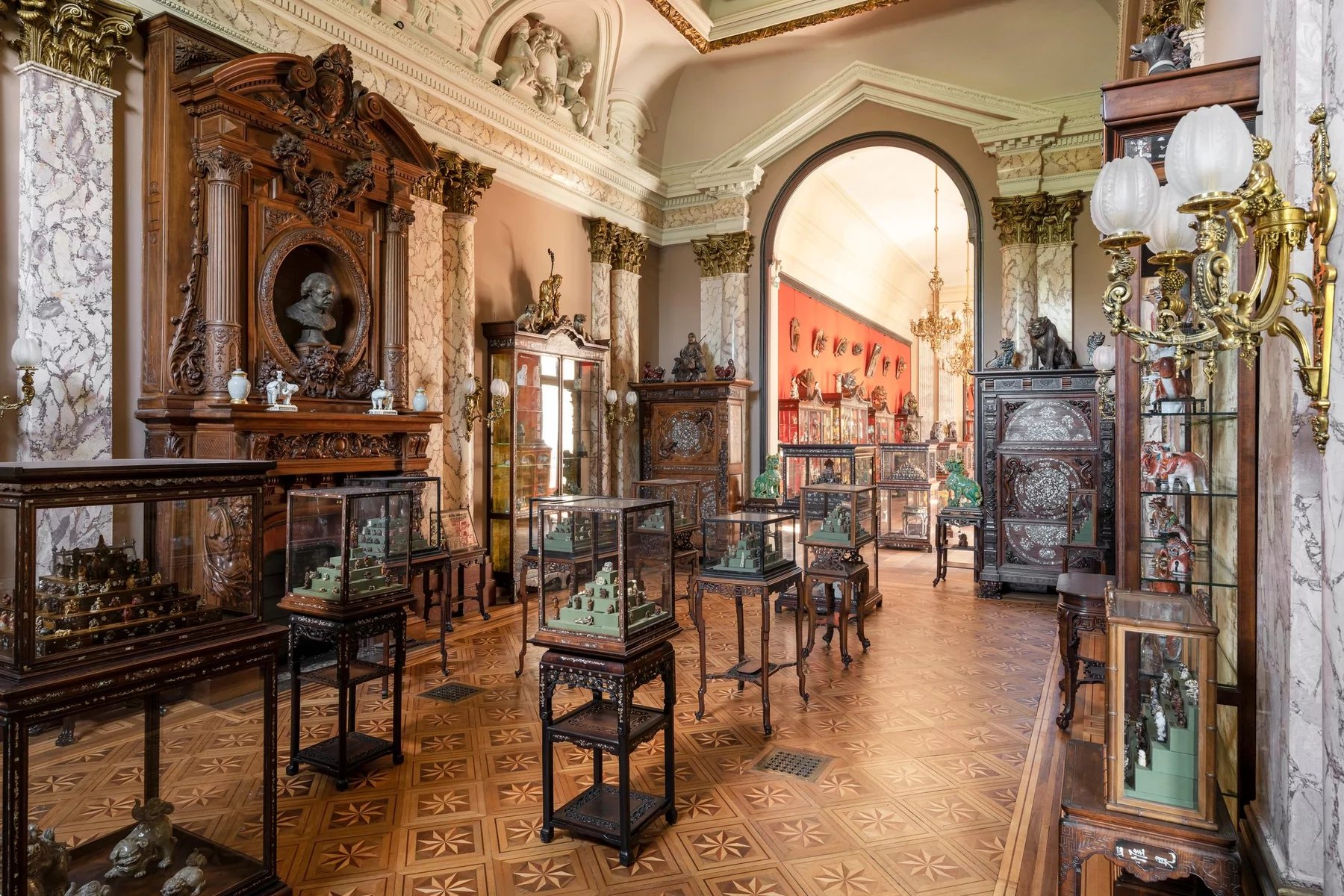
The private residence was built starting in 1875 by architect Pierre-Joseph Olive for Clémence Lecarpentier, widow of Desgranges, on the Avenue du Bois at that time under development. She transferred there her collection of Asian art, which she had begun assembling since 1859 from a family heritage of lacquerware and blue-and-white porcelain, commissioning an entire wing to display it. In 1881, she married Adolphe d'Ennery, the playwright who was also the patron behind the house.
As early as 1892, the couple envisioned bequeathing both their collection and hotel to the State on one condition: that the works should never leave the premises. Émile Guimet was entrusted with the file; Georges Clemenceau — a friend of the couple himself an avid collector of Japanese art — became its executor testamentary. A challenge to the will delayed everything: the bequest was only validated in 1901, and the museum opened on May 27, 1908. The sinologist Paul Pelliot directed it from 1930 to 1945; George Cœdès served as director from 1947 to 1969; between 1953 and 1996, the ground floor housed the Musée Arménien de France.
The interior has been listed as a historic monument since 1979, including its display cases: those of the sculptor and cabinetmaker Gabriel Viardot, inlaid with mother-of-pearl, are part of the work itself. The seven thousand objects — Namban chests from the 1580s, Kakiemon porcelain, fifteen hundred netsuke, Kyoto ceramics, animal and chimera masks — are shown in their original presentation, an intact testament to the taste for the Orient that flourished under the Second Empire. Closed for sixteen years, it reopened in 2012 and again in 2023; visits require a reservation.
All exhibitions and places in and around Paris on Groom