Donjon de Vez
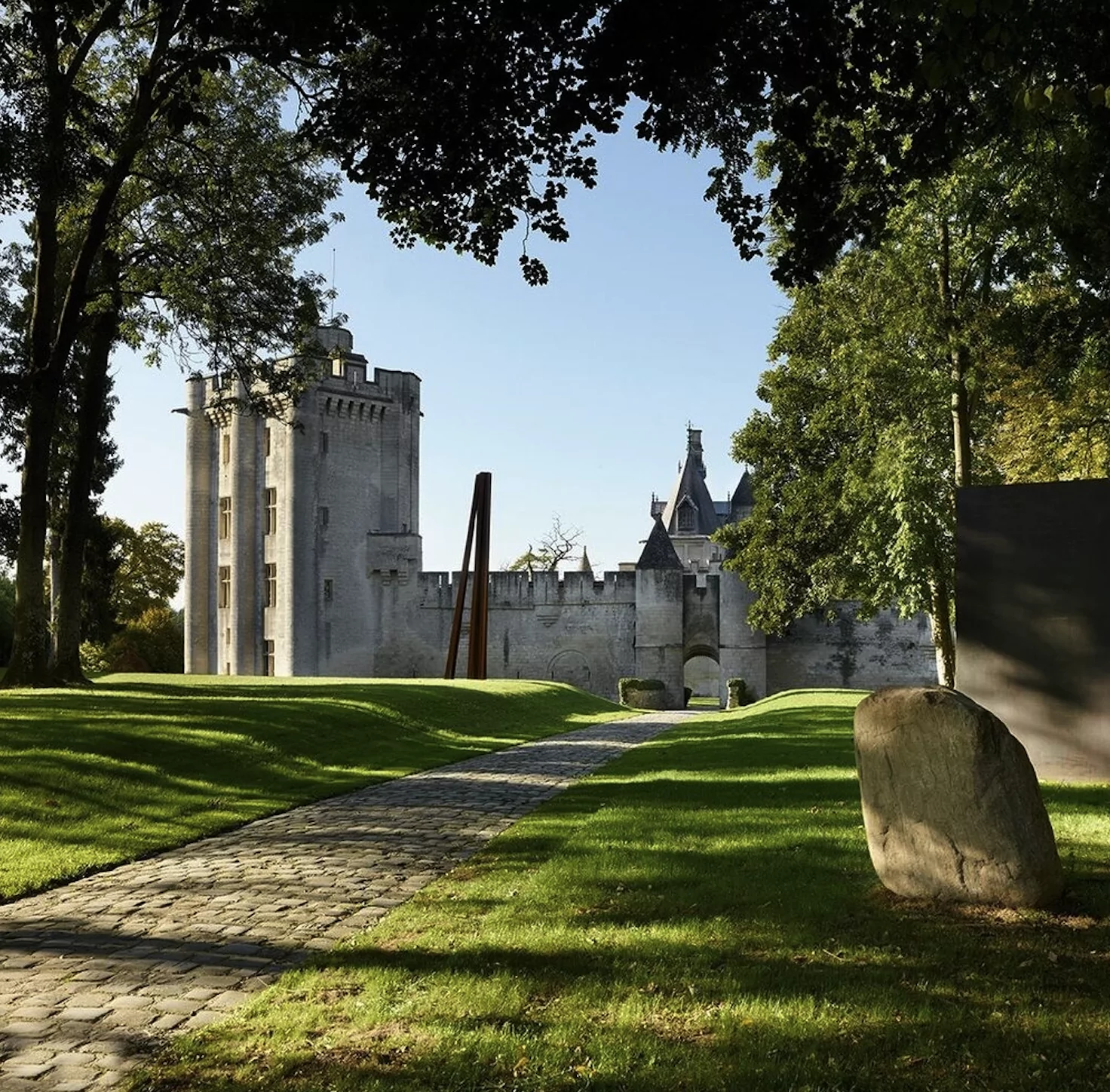
Fourteenth-century fortified castle at the heart of Autumn Valley. The keep itself was built between 1390 and 1410 by Jean de Vez and probably his brother-in-law Robert de Saint-Clair, employing an architect from either the royal or ducal circle—likely Jean Lenoir. Contrary to a persistent legend, it never belonged to Louis d'Orléans, although Jean de Vez served as his chamberlain.
Pentagonal in plan, the keep comprises four habitable floors; its only defensive features are the machicolations bordering the summit terrace. Its primary function was therefore residential rather than military — it would not have withstood a genuine siege. The structure stands approximately 30 meters tall and is situated within a large diamond-shaped fortified enclosure that includes a hexagonal chapel from the same period and the ruins of an earlier residence (1360–1390).
The first castle, begun at the end of the 13th century, was burned down during the Great Peasants' Revolt in 1358, which explains why the family of Vez subsequently carried out a near-total reconstruction. Partially purchased as ruins in 1890 by entrepreneur Léon Dru, the castle underwent radical restoration under Viollet-le-Duc's influence before being classified as a historic monument in 1904—the same year that Dru died.
Since the 1990s, under the impetus of Caroline and Francis Briest, the site combines medieval heritage with contemporary art: gardens designed by Pascal Cribier, stained glass by Daniel Buren, works by Bourdelle, Sol LeWitt, or Bernar Venet now punctuate a visit to the estate.
All exhibitions and places in and around Paris on Groom