Château de Monte-Cristo
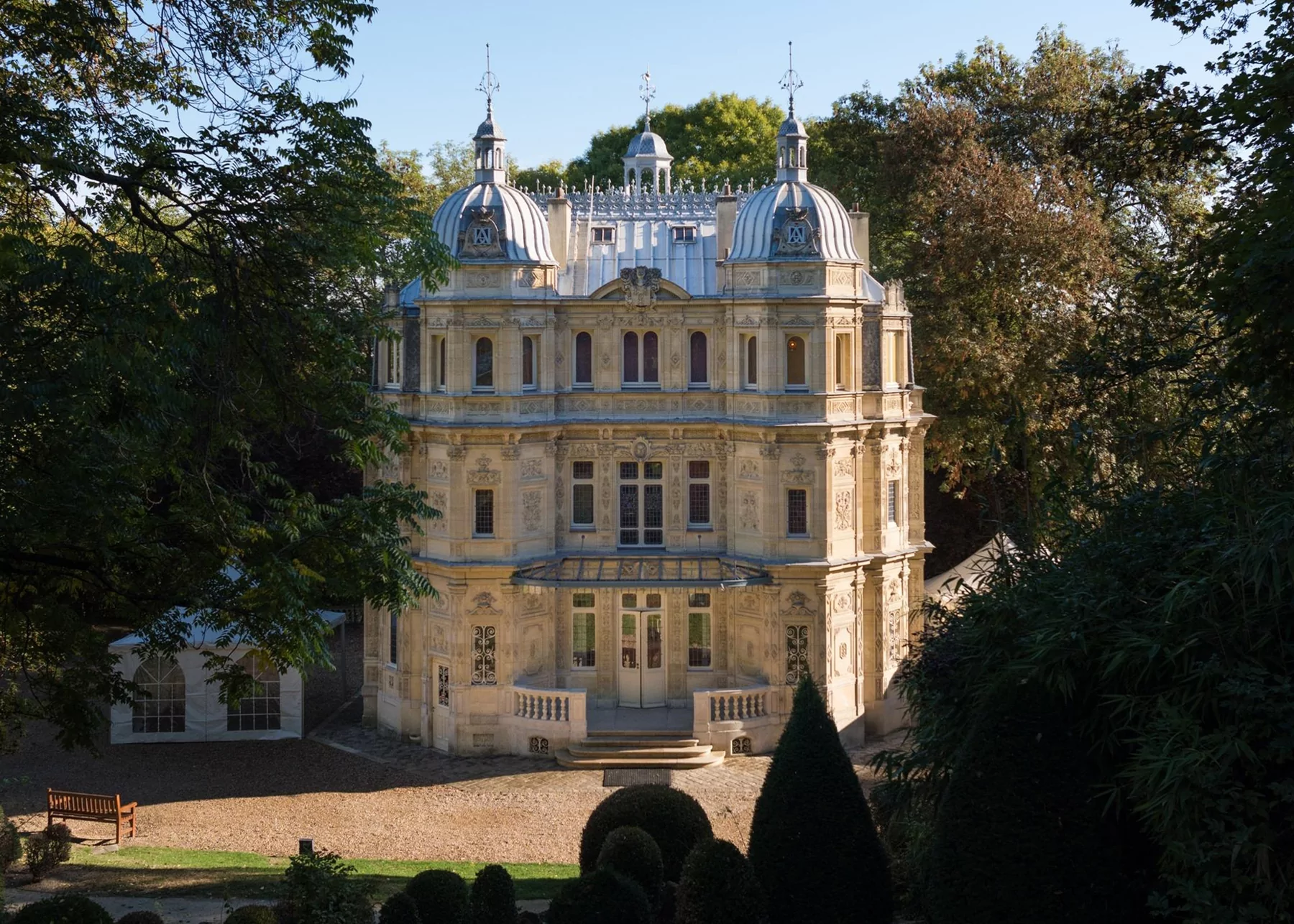
Built between 1846 and 1847 at the request of the writer Alexandre Dumas, then at the height of his literary fame thanks to the success of The Three Musketeers and The Count of Monte Cristo. The architect Hippolyte Durand designed the plans under Dumas's own direction, a man passionate about staging and eclecticism.
The castle blends multiple influences: a main façade inspired by the Renaissance, adorned with sculptures evoking the great authors admired by Dumas, as well as Neogothic elements. The whole is distinguished by its lavish and theatrical decoration, reflecting the flamboyant personality of its patron.
The estate also includes a second building, the Château d'If Pavilion, constructed separately within the park on an island surrounded by moats. In neo-Moorish and neogothic style, it served as Dumas's study room, where he penned part of his work. The pavilion features richly sculpted interior decoration inspired by the Alhambra in Granada.
The landscaped park, designed in the English style, complements the ensemble with its century-old trees, artificial grottoes, and carefully composed vistas, characteristic of the era's romantic taste.
Financially ruined by the sumptuous expenses associated with this construction, Dumas was forced to sell the estate as early as 1849, shortly after its completion. After several changes of ownership and a period of deterioration, the château was saved from destruction in the 20th century thanks to an associative mobilization, and subsequently classified as a historical monument.
All exhibitions and places in and around Paris on Groom