Grande terrasse de Saint-Germain-en-Laye
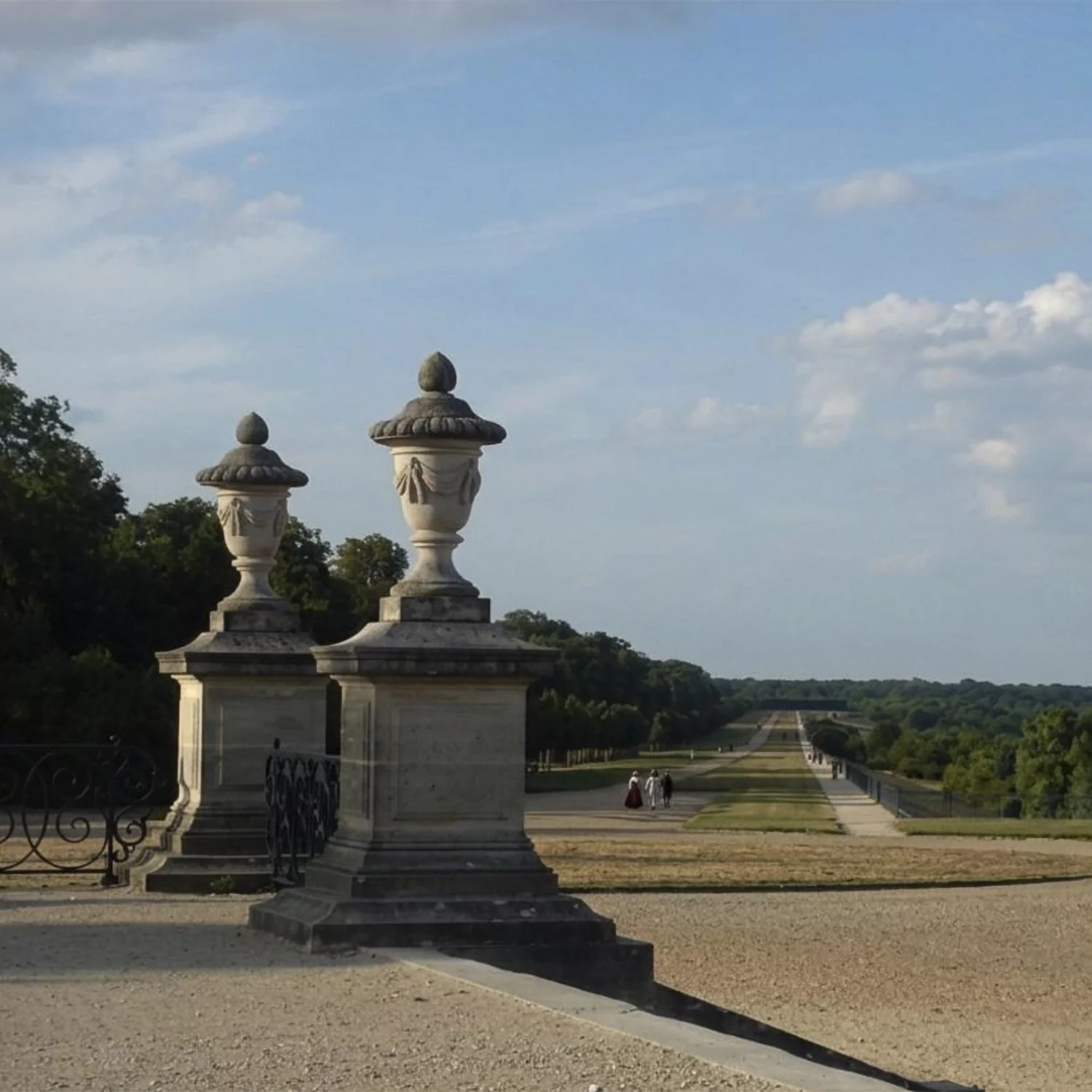
André Le Nôtré designed it between 1669 and 1674 at the request of Louis XIV to embellish the gardens of the Château-Neuf, from which it remains today one of its few surviving remnants.
The work is first a clearing: approximately 2,400 meters long — one mille toise, the standard measure of the era — and about thirty meters wide, carved along the edge of the plateau, bordered by linden trees on one side and the forest on the other. The current lindens were replanted in the early 2000s at the site of those planted during Le Nôtre's time, which had been felled due to age.
The composition plays with a perspective effect. A "half-moon" opens the path at one-third of its length, preceded by a slope and followed by a slight flat section: having walked only one-third of the way, the pedestrian believes they are halfway there; from this viewpoint, the southern depression overwhelms the perspective created by such an excessively long straight line that it would otherwise be discouraging. To the north, the promenade ends at the Octagon, a grove of sculpted trees named for its shape. An iron balustrade added later runs along the entire length.
The view overlooks the Seine loop and all of western Paris: under clear skies, one can distinguish the Eiffel Tower, La Défense, Montmartre, and Tour Montparnasse.
All exhibitions and places in and around Paris on Groom