Hôtel de Sully
Paris
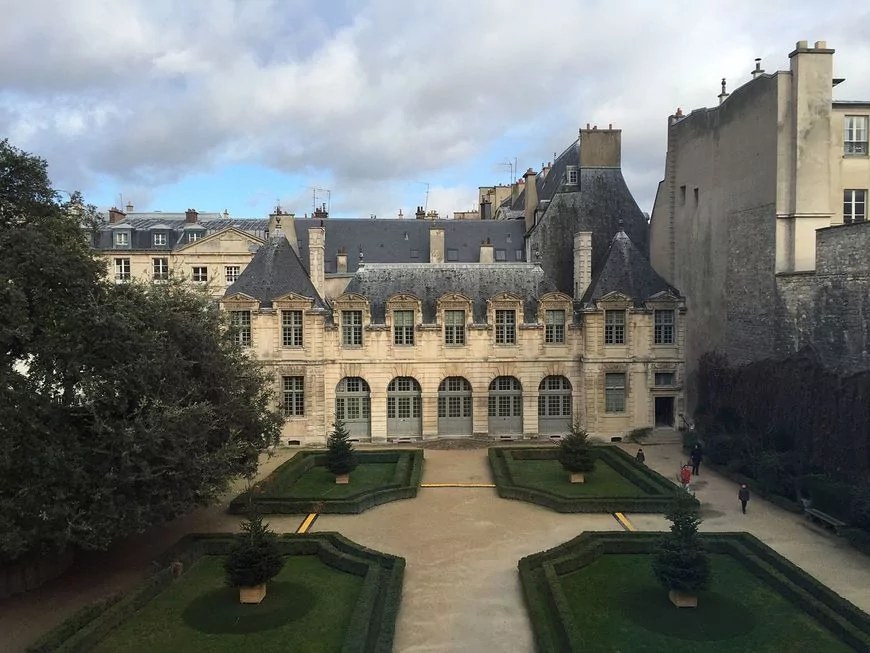
The Controller of Finances Mesme Gallet purchased the site in 1624 within the Marais, then undergoing intense aristocratic development, and commissioned construction the following year—the contract was awarded to architect Jean Androuet du Cerceau. An inveterate gambler, he went bankrupt before its completion and transferred the unfinished hôtel to one of his creditors in 1627; the entire building was finished in 1630. Maximilien de Béthune, Duke of Sully and former minister under Henry IV, acquired it fully furnished in 1634 while out of favor: he lived there only briefly but left his name and interior decoration intact to this day. His son added a wing facing the garden in 1660.
The building is characteristic of the French-style hôtel: a central block situated between courtyard and garden, arranged in a U-shape with two wings closed by street-facing pavilions connected by a terrace. Due to space constraints, a single courtyard serves both the honor side (guests) and service side—carriage sheds, stables, kitchens, offices, dung yard with its well.
The façade decoration belongs to late Mannerism, still indebted to the Renaissance: sculpted trumeaux featuring allegories, alternating pediments, playful use of bossage, and ostentatious orders. The same taste governs the layout, with a central staircase in the main residence, aligned along the axis connecting the entrance to the garden passage.
Divided into apartments and shops in the nineteenth century, acquired by the State in 1944, it was restored between 1945 and 1974: the terrace has been reinstated and new construction added above the destroyed porch. A discreet passage connects it to Place des Vosges.
All exhibitions and places in and around Paris on Groom