Cité Internationale Universitaire de Paris
Paris
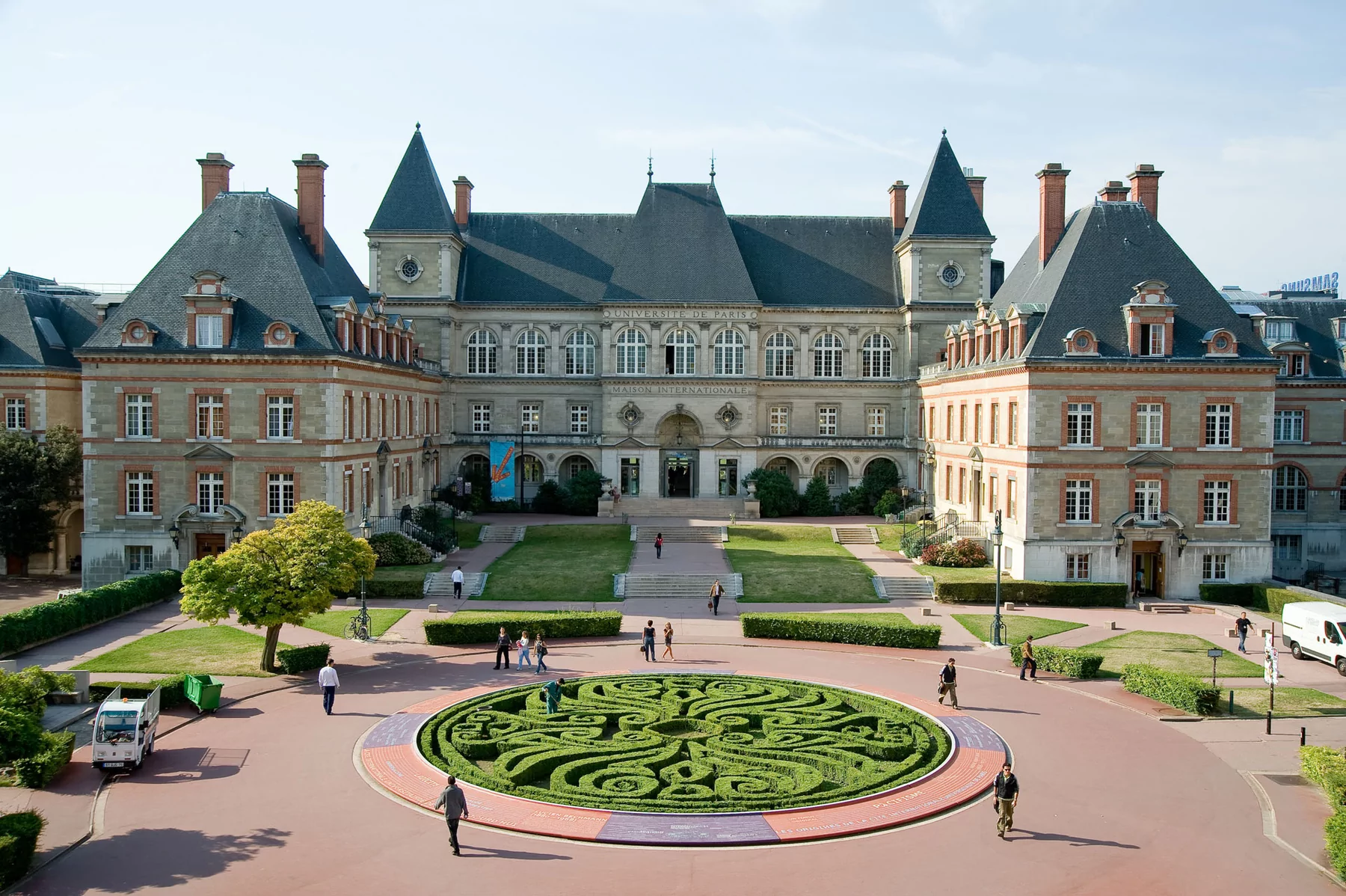
The project emerged in the early 1920s from the convergence of hygienist and pacifist concerns following World War I with a housing crisis for students. It was championed by Minister André Honnorat and Rector Appell. The selected site is that of Thiers' fortifications, raised in 1845 south of Paris and downgraded by a vote in 1919. An agreement signed in 1921 established the rules defining its form: only nine hectares were designated for construction; the remainder was marked non-aedificandi to accommodate a park.
The first residence opened in 1925, funded by industrialist Émile Deutsch de la Meurthe. Others followed immediately, financed by patrons, industrialists, or foreign governments: as early as 1927 half of the estate was built, and nineteen houses rose from the ground in less than fifteen years, embodying the architectural eclecticism of the interwar period. On the eve of war, La Cité housed 2,400 residents representing 52 nationalities around the Maison internationale, constructed with the collaboration of John D. Rockefeller Jr.
To increase capacity, the maximum height was raised from four to ten floors, and by 1930 the site expanded to nearly forty hectares. This period saw the establishment of International Style architecture, featuring buildings designed by Le Corbusier, Charlotte Perriand, Lúcio Costa, or Claude Parent—including the Swiss Foundation, constructed between 1931 and 1933 by Le Corbusier and Pierre Jeanneret.
The campus currently comprises around forty houses and nearly 6,000 residents on a thirty-four-hectare plot. New residences continue to be built there.
All exhibitions and places in and around Paris on Groom