Château de Fontainebleau
Fontainebleau
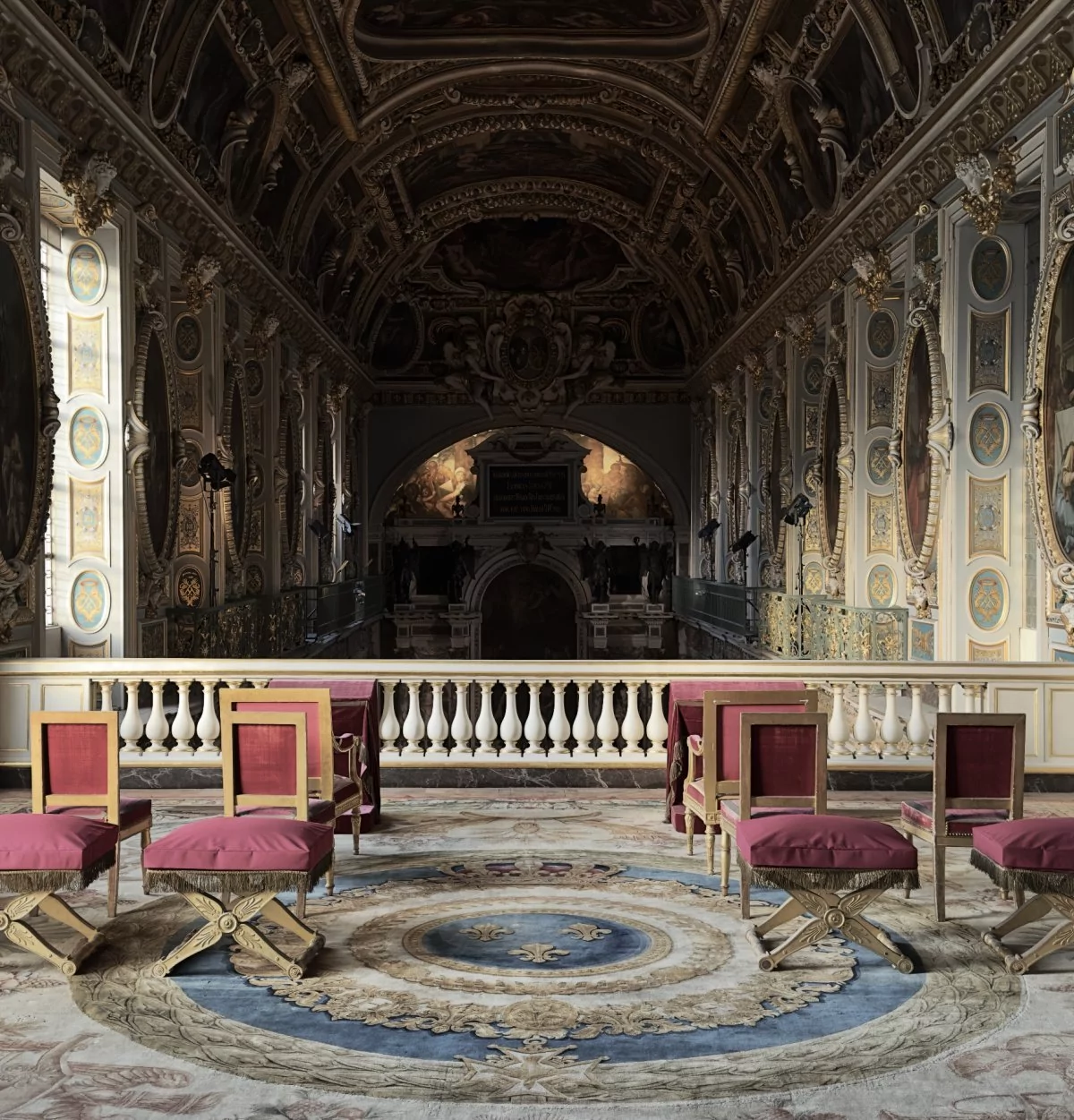
François I has razed the feudal castle, except for the keep and part of the northern curtain wall, to build a Renaissance residence there. He brings from Italy artists, antiquities, and Roman statue molds to cast bronzes, and installs a library that will become one of the sources of the Bibliothèque nationale. Vasari designates this place as "New Rome." From 1534 onward, Rosso Fiorentino designs the Galerie François Ier, where high-relief frescoes and stuccos intertwine; between 1538 and 1546, the three wings of the Cour du Cheval Blanc rise.
Each reign adds without destroying: Henry II has the ballroom built; Catherine de' Medici commissions Primaticcio, who becomes superintendent of royal buildings in 1559, while Nicolò dell'Abbate decorates the castle. Henry IV expands the residence with several wings and the Baptistery gate, develops the Cour des Offices, and straightens the Oval Court: the palace can then accommodate nearly a thousand people, and a second Fontainebleau school forms around Fréminet and Ambroise Dubois. Louis XIV, who prefers Versailles to it, makes few structural changes but has the gardens redesigned by Le Nôtre—from Diane's Garden in 1645 to the Cascades Basin in 1661.
Napoléon I passes his final days in power, abdicates on April 4, 1814, and bids farewell to the Old Guard on April 20 in the courtyard that bears this name since then. It was he who referred to the castle as "the house of centuries." Classified in 1862, the estate has been inscribed on the World Heritage List since 1981.
All exhibitions and places in and around Paris on Groom