Château de Rambouillet
Rambouillet
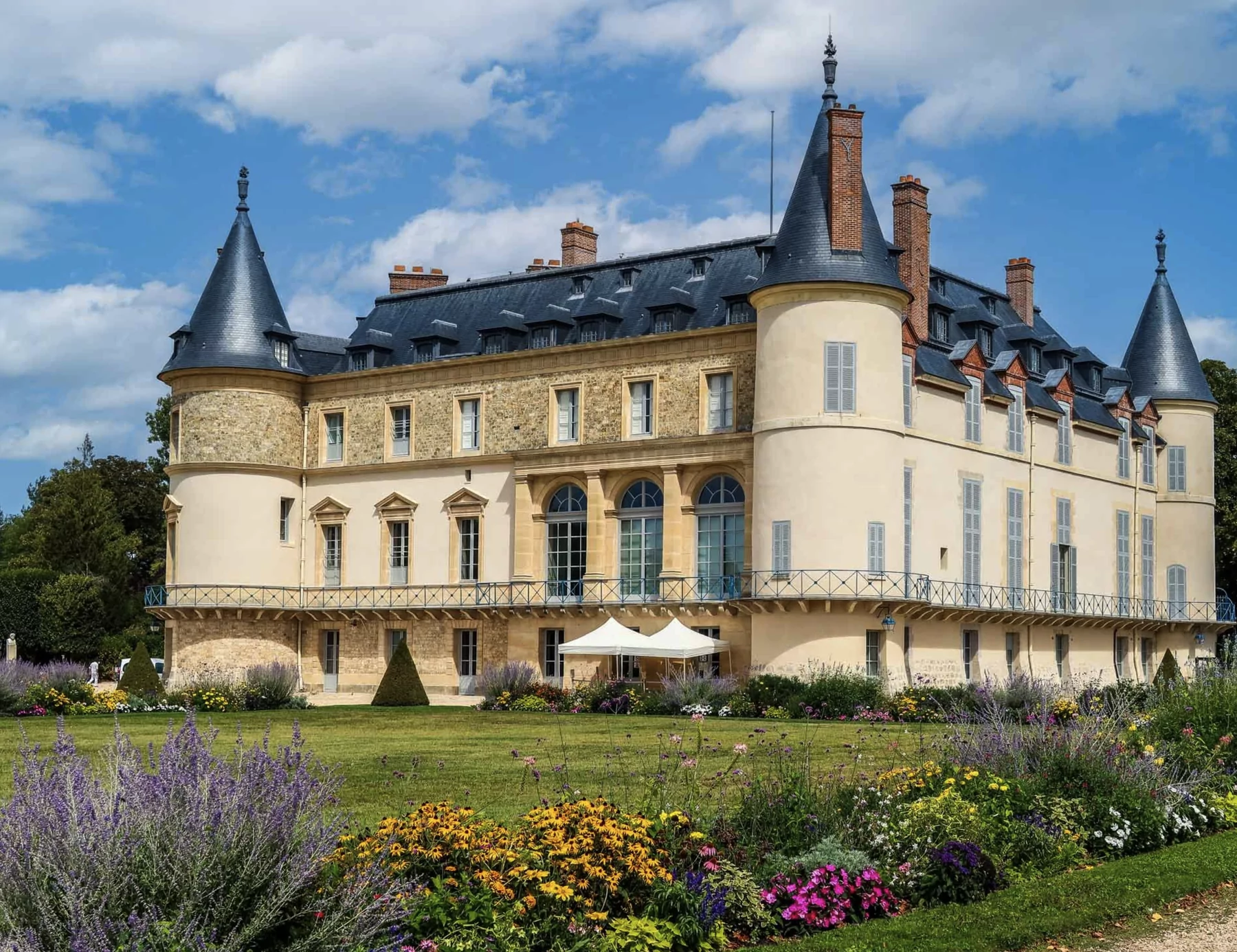
The site was originally a manor house, converted in 1374 into a fortified castle with an irregular pentagonal layout surrounded by moats—the same year Charles V ordered the fortification of castles and had the Bastille built. The main tower of this fortress survived all subsequent campaigns: François Ier came here to hunt but died there in 1547. For over three centuries, the d'Angennes family owned it; they were granted marquisate status in 1612—the period when Catherine de Vivonne hosted her famous salon at Paris's Hôtel de Rambouillet.
The Water Gardens were created after 1699: taking advantage of marshy land, Fleuriau d'Armenonville dug canals and ponds along the axis of the façade. The Count of Toulouse, legitimised son of Louis XIV, purchased the estate in 1706, expanded it to 13,000 hectares, built stables, and launched two building campaigns; that from 1730–1736 left a set of sculpted woodwork still in place. His son, the Duke of Penthièvre, scattered throughout the park English taste structures: the Shell Pavilion, hermitage, Chinese kiosk.
Louis XVI purchases it in 1783 for sixteen million livres. Marie-Antoinette despises what she calls "the gloomy Gothic"; to win her over, the king arranges new apartments, redesigns the gardens by Hubert Robert, and secretly builds a farm and dairy inaugurated in 1787.
Napoleon turned it into a hunting lodge, demolished the east wing in 1805 and spent his last night there as French Emperor in 1815. Once royal residence, then imperial palace, now presidential mansion, the castle hosted the first G6 summit in 1975.
All exhibitions and places in and around Paris on Groom