Conciergerie
Paris
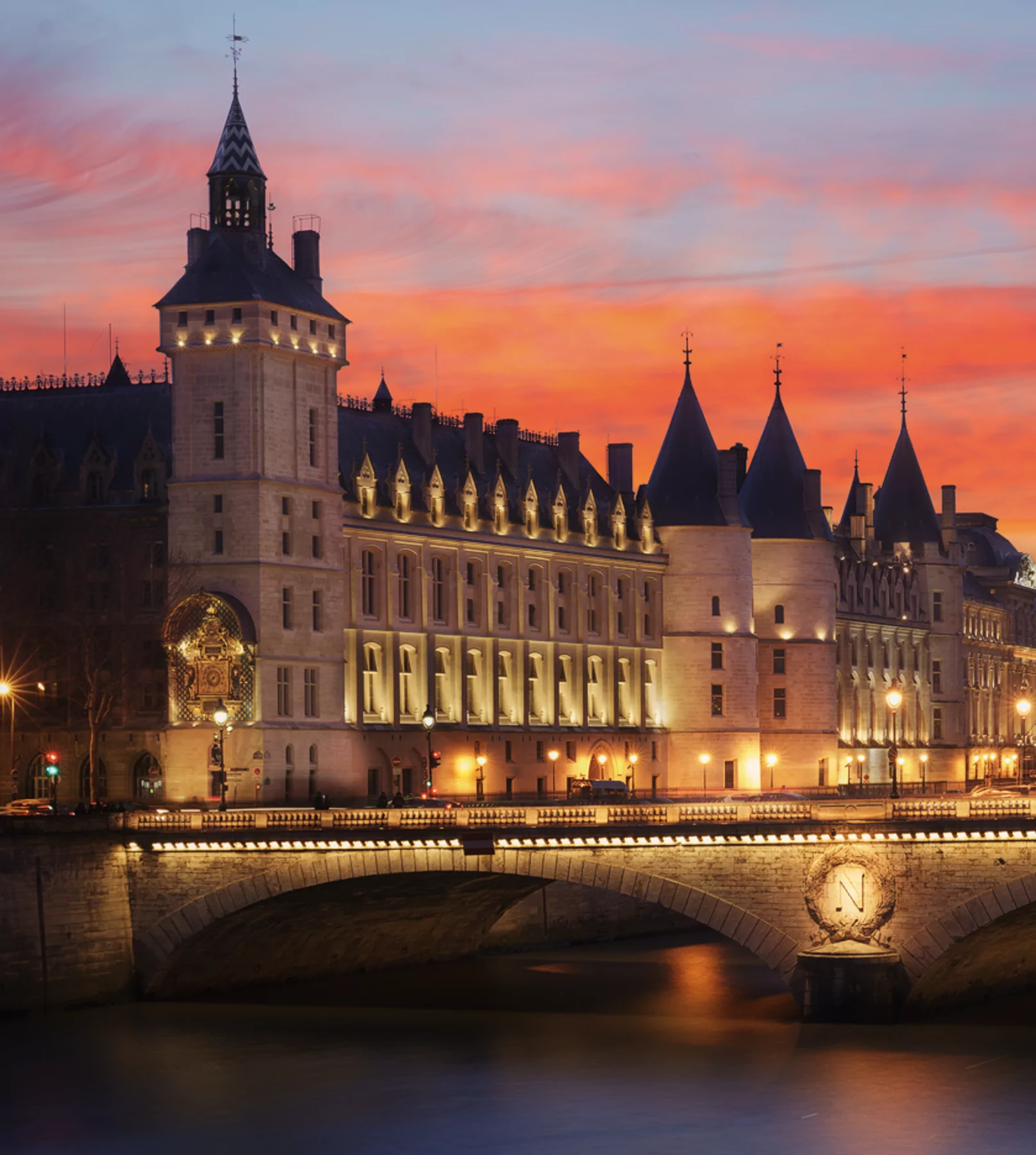
Former palace of justice and prison located on the west side of Île de la Cité, beneath the current Palais de Justice de Paris. It originally formed part of the Royal Palace of the Cité, which also included the Sainte-Chapelle.
The site dates back to the Gallo-Roman period, before the Capetians built a fortified residence there. From the 11th to the 14th century, notably under Philip IV the Fair, the palace expanded considerably with the construction of the Great Hall and the towers on the north facade. The building derives its name from the "concierge," the keeper appointed to oversee its administration.
Under Charles V, as the royal residence was relocated, cells were added and the building became a true prison, housing both ordinary criminals and political prisoners.
During the French Revolution, the Revolutionary Tribunal convened there from 1793, and approximately 2,780 prisoners were tried and guillotined, including Marie-Antoinette, Madame Élisabeth, the Girondins, Danton, and Robespierre himself. At the height of the Reign of Terror, up to four out of five condemned were executed.
After the Restoration, it became a palace of justice and prison, hosting notably Marshal Ney and future Napoleon III. Restored in the 19th and 20th centuries in a Neo-Gothic style, the prison definitively closed in 1934. Today managed by the Centre des monuments nationaux, it is visited as a museum, featuring its medieval rooms (Salle des Gens d'Armes, Salle des Gardes), the prisoners' chapel, the women's court, and the room of names.
All exhibitions and places in and around Paris on Groom